

Most traders don't lose because of bad ideas. They lose because of bad execution. Manual order entry, delayed market data, emotional override on a losing position — these are the real enemies of consistent performance. Understanding why use trading platforms goes well beyond convenience. 70% of all trades in 2025 are executed through electronic platforms, and that number isn't driven by trend-chasing. It's driven by results. Whether you're placing your first futures trade or running a multi-asset portfolio, the platform underneath your strategy determines a lot more than you think.
Table of Contents
- Key Takeaways
- Why use trading platforms: the core case
- Benefits of trading platforms you can actually measure
- Choosing the right platform for your trading style
- How automation changes the trading workflow
- My honest take after years of watching traders choose platforms
- Start trading smarter with Apextradellc
- FAQ
Key Takeaways
| Point | Details |
|---|---|
| Platforms drive execution quality | Routing logic and fill rates affect long-term profitability more than commission costs alone. |
| Automation enforces discipline | Automated risk controls and order routing reduce emotional decision-making during volatile sessions. |
| Features separate good from great | Advanced charting, hotkeys, and customizable layouts directly reduce costly errors under pressure. |
| Platform type matters by use case | Web-based, desktop, and institutional platforms each serve different needs; matching these to your style is non-negotiable. |
| Practice environments have real limits | Demo accounts often fail to replicate live fills, making realistic simulation a must-have feature. |
Why use trading platforms: the core case
A trading platform is specialized software that connects you to financial markets and provides the tools to analyze, execute, and manage trades. That definition sounds simple. The reality is more layered.
At the architecture level, platforms pull real-time price feeds from exchanges or liquidity providers, display order books, and route your orders through smart order routing logic that seeks the best available fill. Most retail traders think about platforms purely in terms of their charts. Professionals think about them in terms of execution infrastructure, which is where the real money is made or lost.
The core features of trading platforms generally include:
- Real-time market data and quotes across multiple instruments
- Multiple order types (market, limit, stop, bracket, OCO) for precise trade management
- Advanced charting with technical indicators, drawing tools, and time-frame flexibility
- Risk controls including position size calculators, maximum loss limits, and margin alerts
- Multi-asset support covering stocks, forex, futures, options, and cryptocurrency
- Trade logging and reporting for performance review and tax documentation
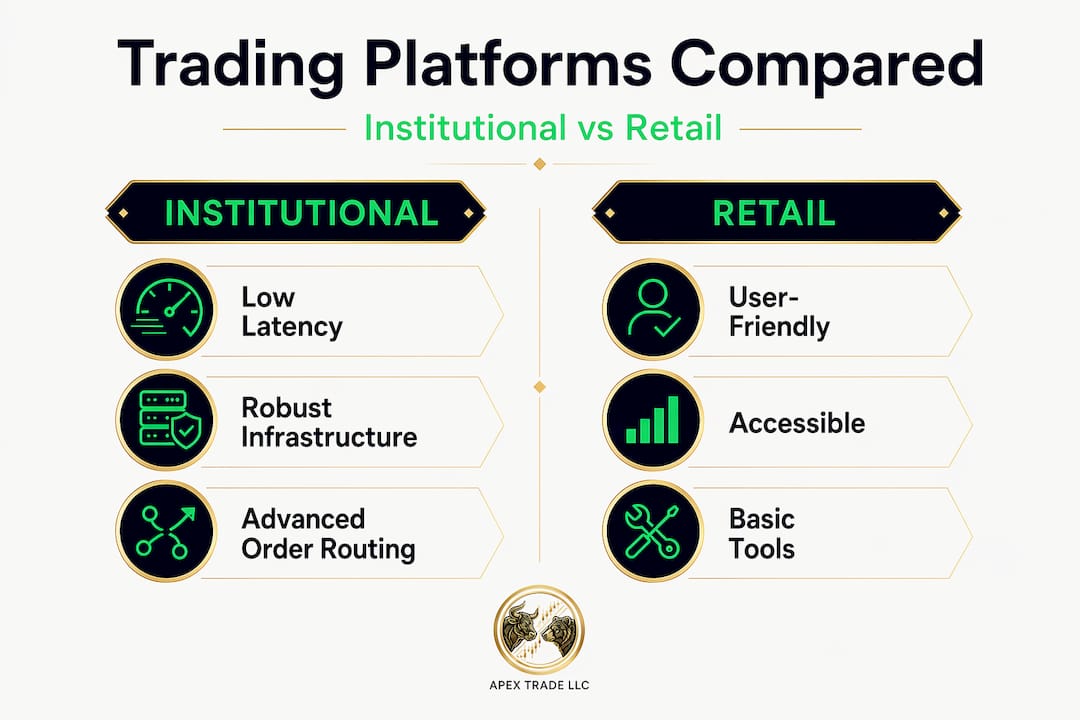
What separates institutional-grade platforms from standard retail ones is largely latency and infrastructure. Retail platforms provide pro-grade interfaces and sophisticated tools, but institutional setups still hold an edge in raw speed and co-location access. That gap is narrowing fast, though.
Pro Tip: When evaluating a new platform, test its order routing under simulated volatility. Place a limit order during a news event and track slippage. That single test tells you more than any feature list.
Benefits of trading platforms you can actually measure
The advantages of online trading through a quality platform aren't abstract. They show up in your P&L.
Speed is the most obvious one. Manual phone orders or even basic web-based execution can't compete with the automated order routing built into modern platforms. In fast markets, a two-second delay is the difference between your intended fill and a much worse one. Routing logic and order fill quality significantly impact long-term profitability beyond what commission fees ever will.
Beyond speed, consider these measurable benefits:
- Better decision-making through analytics. Platforms with built-in scanners, heatmaps, and multi-timeframe charting let you spot setups you'd miss with spreadsheet-level analysis. Decisions grounded in real data beat gut calls every session.
- Automated risk management. Pre-set stop losses, profit targets, and position sizing rules execute without your intervention. This removes the hesitation that costs traders real money during drawdowns.
- Lower operating costs. Compared to advisor-directed or phone-based trading, platforms cut per-trade friction dramatically. Fewer manual steps mean fewer errors and less time spent on administrative work.
- Access to otherwise unreachable markets. From foreign exchange pairs to cryptocurrency derivatives, platforms give you 24/7 access to asset classes that would require institutional relationships to reach otherwise.
- Consistent trade logging. Every trade is timestamped, categorized, and stored. For performance review or tax purposes, that record is irreplaceable.
The importance of trading platforms becomes especially clear in risk management. A platform that enforces your predetermined stop without asking for confirmation removes an entire category of discretionary error. That's not a minor feature. That's discipline baked into software.
Choosing the right platform for your trading style
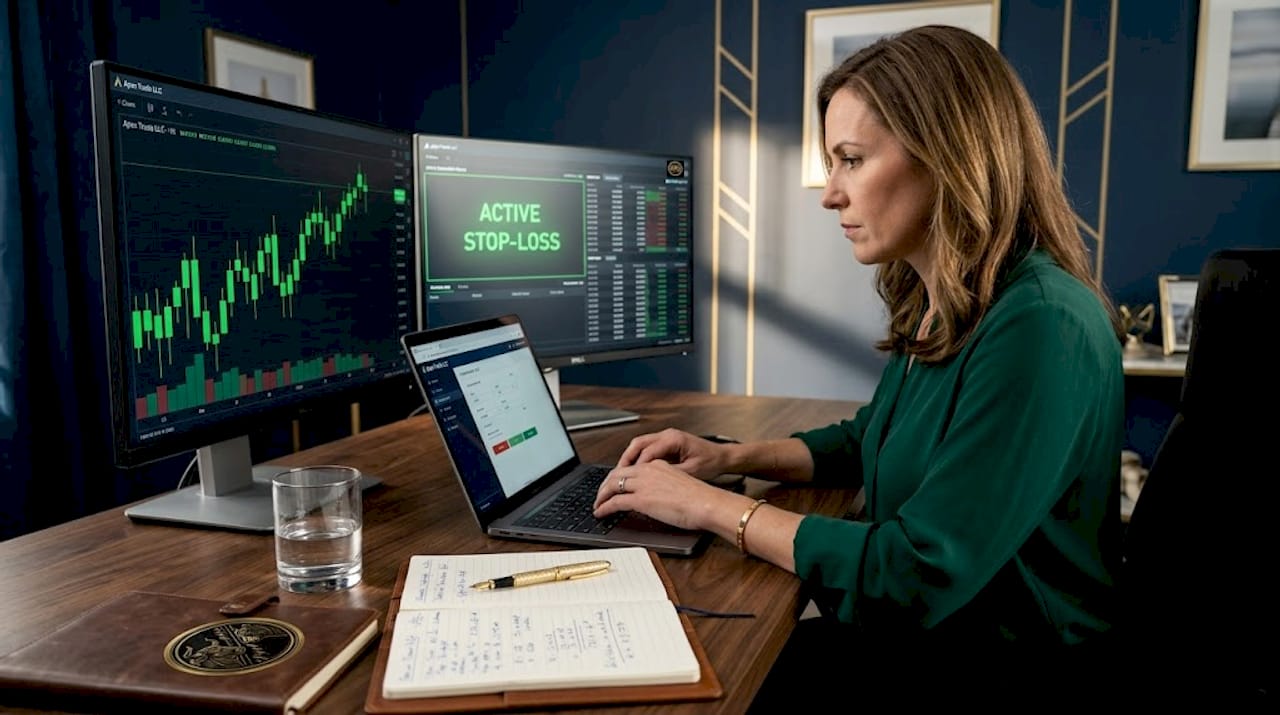
Not all platforms are built for the same trader, and using the wrong one is one of the most common and least discussed mistakes in the space.
Here's how the major platform types compare:
| Platform Type | Best For | Key Strengths | Limitations |
|---|---|---|---|
| Web-based | Beginners, casual traders | No installation, cross-device access | Higher latency, limited customization |
| Desktop software | Active and professional traders | Speed, hotkeys, deep customization | Tied to specific hardware |
| Mobile apps | Trade monitoring and alerts | Convenience, portability | Not suited for complex analysis |
| Institutional platforms | High-volume professionals | Co-location, low latency, API access | High cost, steep learning curve |
| Specialized crypto platforms | Crypto-focused traders | 24/7 access, multi-exchange support | Limited traditional asset coverage |
Trading platforms for beginners often look appealing because they're clean and simple. But simplicity that hides order type options or strips out risk controls becomes a liability the moment you scale up.
For active traders, platform stability during high-volatility events is a non-negotiable factor. A platform that lags or disconnects during a major economic release isn't just inconvenient. It's financially dangerous. Workflow efficiency features like hotkeys and customizable layouts actively prevent costly errors during those volatile windows.
When comparing options, also consider your primary asset class. Futures traders prioritize depth-of-market visibility and DOM-based order entry. Forex traders need tight spreads and reliable currency pair data. Crypto traders want 24/7 uptime and multi-exchange aggregation. A platform built for one of these may underserve the others considerably.
Pro Tip: Before committing to any platform long-term, run it through at least three weeks of live trading with a small position size. Paper trading results don't tell you how the platform feels under real P&L pressure.
How automation changes the trading workflow
This is where modern platforms separate themselves from anything that existed a decade ago. Automation isn't just about trading bots, though those are a major part of the picture. It's about removing the repetitive, error-prone manual steps that accumulate across a trading session.
Order routing is one example. A smart routing engine evaluates available liquidity across venues and executes at the best available price, without you making that judgment call in real time. Risk calculations that once required a spreadsheet now happen before your order hits the market. Trade logs populate automatically, tagged by strategy and asset. For anyone thinking about automated trading workflows, this reduction in administrative overhead compounds over time.
Chart trading represents another meaningful shift. 75% of active traders prefer platforms with advanced charting and trade-in-chart capabilities, and the adoption rate of those platforms has grown 40% year-over-year. Placing orders directly from a chart, dragging stop levels, and seeing your risk-to-reward ratio update in real time changes how you interact with a trade from entry to exit.
The cognitive load reduction matters more than most traders acknowledge. When you're not manually calculating position sizes, logging trade data, or hunting through menus to adjust a stop, you're conserving mental energy for actual market analysis. That reserve shows up in better late-session decisions, where fatigue most often causes mistakes.
One commonly overlooked area is the practice environment. Demo accounts often fail to simulate real trading conditions, which creates discipline gaps that only appear when real capital is at risk. Platforms that offer realistic fill simulation, live-data practice, and enforceable drawdown limits in their simulators are genuinely preparing you for live markets. Most don't.
For traders interested in a more thorough trading integration approach, connecting your platform automation with broader system workflows unlocks an entirely different level of consistency.
My honest take after years of watching traders choose platforms
I've seen traders with genuinely profitable strategies blow up their accounts not because the strategy failed, but because the platform failed them. Execution slippage on a strategy that requires tight fills. A platform that disconnected during a news spike. A demo environment that looked nothing like live conditions when real money was on the line.
The most underrated decision in trading isn't which asset to trade or what indicator to use. It's which platform you run your operation on. I've seen the difference between routing quality affecting fills firsthand, and I can tell you that two platforms running the exact same strategy can produce meaningfully different results over a month of trading.
My view on why choose trading software carefully: platforms aren't passive conduits. They're active components of your edge. If your platform doesn't enforce your risk rules automatically, they aren't really rules. They're intentions. And intentions break down under pressure every single time.
For anyone bridging the gap from demo to live, I'd also push back on the common advice to just "trade small at first." Trade small, yes, but on the platform you actually intend to use at scale. The muscle memory you build around your platform's layout, hotkeys, and order entry behavior is part of your skill set. Building it on one platform and then switching is more disruptive than most people expect.
Choose a platform you can grow with, one that matches your current needs but doesn't cap your ceiling when your strategy matures.
— James
Start trading smarter with Apextradellc
If you've made it this far, you already understand that the right platform isn't a nice-to-have. It's the foundation of everything else you do as a trader. Apextradellc is built specifically for traders who want that foundation to be solid, automated, and ready to scale.
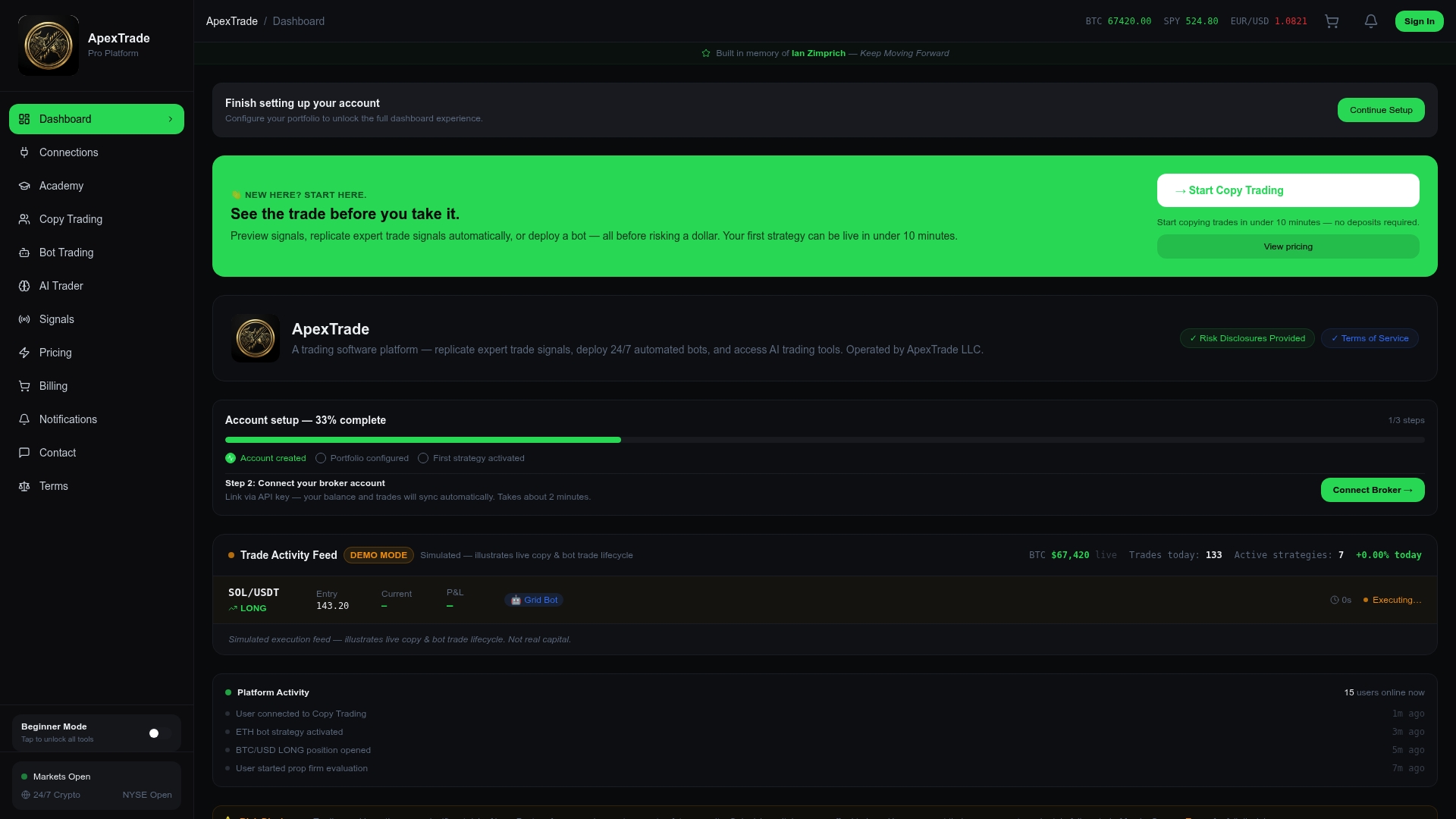
From automated trading bots that execute your strategy around the clock to copy trading features that let you replicate the activity of consistently profitable traders, Apextradellc gives you the infrastructure that serious trading demands. The platform supports crypto, forex, and stock markets with 24/7 uptime, real-time analytics, and professional-grade risk controls baked in. Whether you're building your first automated strategy or scaling an existing one, Apextradellc gives you the tools without the institutional price tag. Explore the full trading platform and see what structured, automated trading actually looks like in practice.
FAQ
Why use trading platforms instead of manual trading?
Trading platforms automate execution, enforce risk rules, and provide real-time data that manual trading simply cannot match. The result is faster fills, fewer errors, and more consistent decision-making across every session.
What are the most important features of trading platforms?
The most critical features include smart order routing, advanced charting, automated risk controls, multi-asset support, and detailed trade logging. These features directly impact execution quality and long-term performance.
Are trading platforms suitable for beginners?
Yes, though beginners should prioritize platforms that offer realistic simulation environments, not just simplified interfaces. Practice environments with realistic fills better prepare new traders for the conditions they'll face with real capital.
How does automation reduce trading errors?
Automated order routing, pre-set stop losses, and position size enforcement reduce cognitive load and remove discretionary decision points where emotional bias typically causes the most damage.
What is the difference between retail and institutional trading platforms?
Retail platforms offer professional-grade tools at accessible price points, while institutional platforms maintain speed and latency advantages through co-location and direct exchange access. For most individual traders, a high-quality retail platform is more than sufficient.