

Crypto trading is far more than the "buy low, sell high" idea most people picture. Crypto trading involves speculating on digital asset price movements by opening long or short positions across timeframes that range from seconds to months. The reality is that both individual and professional traders are now using structured strategies, automation tools, and risk frameworks to compete in markets that never close. This guide walks through exactly what crypto trading means, how different styles work, what tools you actually need, and where the real risks hide so you can approach the markets with clarity and confidence.
Table of Contents
- Defining crypto trading: Beyond buying and selling
- Trading styles and timeframes: Which fits your strategy?
- Essential tools and operational setup for efficient trading
- Common risks in crypto trading and how to manage them
- Why most traders underestimate operational risk and what actually works
- Ready to enhance your crypto trading?
- Frequently asked questions
Key Takeaways
| Point | Details |
|---|---|
| Crypto trading explained | Crypto trading means speculating on digital asset prices using short- or medium-term strategies, not long-term holding. |
| Trading styles matter | Your choice of trading style, from scalping to swing trading, shapes your risk and tool requirements. |
| Set up for success | Operational decisions on exchanges, wallets, and automation tools matter as much as your strategy. |
| Risk management is essential | Security, volatility, and fraud are major risks in crypto trading—prepare and protect before you trade. |
Defining crypto trading: Beyond buying and selling
Most people assume crypto trading means purchasing Bitcoin and waiting for it to rise. That misses almost everything that makes trading a distinct discipline. At its core, crypto trading is speculating on price movements by taking positions and managing entries and exits over a chosen time horizon. The key word is speculating, not owning.
Two fundamental positions define every trade:
- Long position: You expect the price to rise, so you buy first and sell later at a higher price.
- Short position: You expect the price to fall, so you sell first (often using borrowed assets or derivatives) and buy back later at a lower price.
This is a critical distinction from investing. An investor buys Bitcoin and holds it for years, largely indifferent to short-term swings. A trader, by contrast, is actively managing positions, setting stop-losses, and responding to price action across specific timeframes. Traders care deeply about what happens over the next hour, day, or week.
Trading is not about predicting the future with certainty. It's about making high-probability decisions with defined risk, then executing those decisions consistently.
Common trading timeframes include intraday (within a single day), short-term (days to a couple of weeks), medium-term (weeks to a few months), and longer-term positional trades that can last several months. Each timeframe changes what signals matter, how much capital you risk per trade, and how emotionally demanding the process becomes.
One persistent misconception is that you need to hold cryptocurrency to trade it. Derivatives like futures and options let you speculate on price without ever touching the underlying asset. Another misconception is that trading is just pattern recognition. In practice, risk management, position sizing, and operational discipline matter just as much as reading a chart. Explore our core crypto trading guide to see how these fundamentals connect to real execution.
Trading styles and timeframes: Which fits your strategy?
Trading styles differ primarily by holding period, and that single variable changes almost everything: the risks you face, the tools you need, the psychological demands, and the execution speed required. Here is a breakdown of the four main styles.
| Style | Typical holding period | Primary risk | Automation potential |
|---|---|---|---|
| Scalping | Seconds to minutes | Slippage, fees | Very high |
| Day trading | Minutes to hours | Intraday volatility | High |
| Swing trading | Days to weeks | Overnight and news gaps | Moderate |
| Position trading | Weeks to months | Macro trend reversals | Lower |
Scalping is the most intense style. Traders open and close dozens or even hundreds of positions per day, capturing tiny price movements each time. The profit per trade is small, so volume and speed are everything. Manual scalping is exhausting and error-prone, which is exactly why automation is so attractive here.
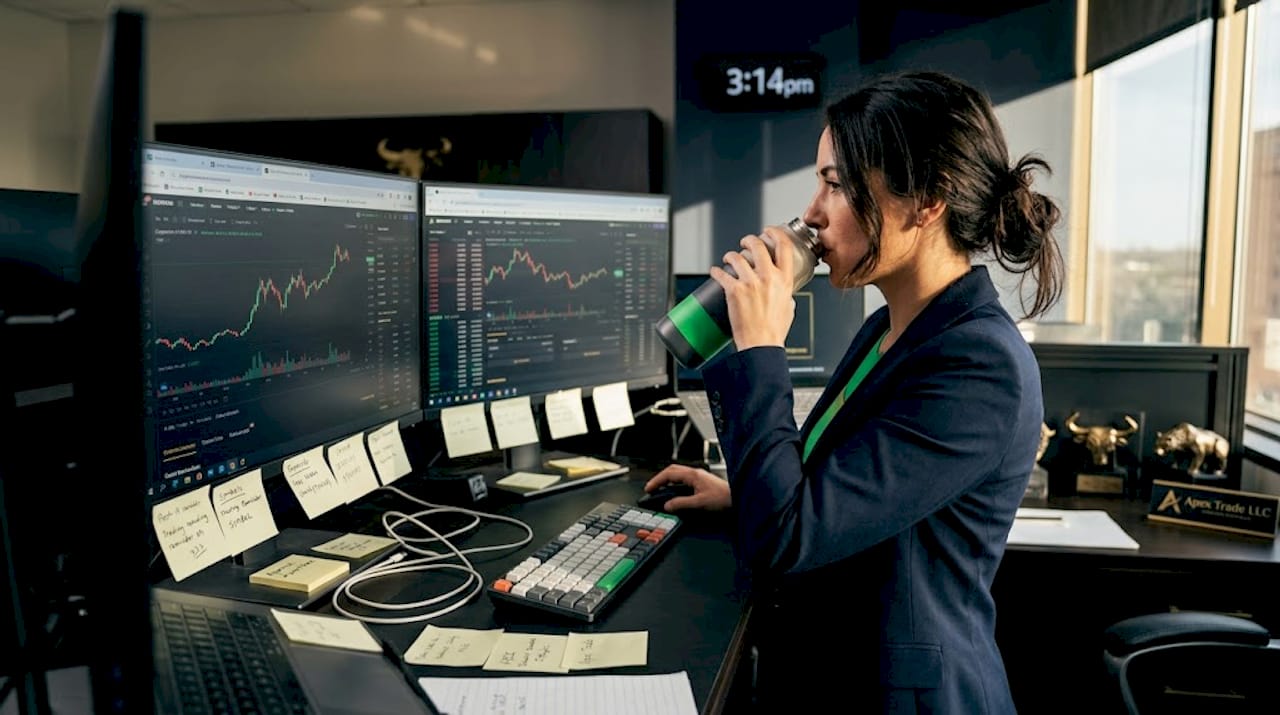
Day trading keeps all positions closed before the market session ends (though crypto markets run 24/7, many day traders still define a personal session). The focus is on intraday price action, technical patterns, and volume signals. Emotional discipline is critical because losses and wins can stack up quickly within a few hours.
Swing trading targets larger moves over days or weeks. It suits traders who cannot monitor screens all day but still want active involvement. The risk shifts from intraday noise to overnight gaps, news events, and macro sentiment changes.
Position trading is the closest style to investing, but the trader still actively manages the position with defined exit criteria rather than simply holding indefinitely.
Here is a practical way to choose your style:
- Assess your available time. Scalping and day trading demand near-constant attention during active periods.
- Evaluate your emotional tolerance. Faster styles amplify stress because losses hit faster and more frequently.
- Match your capital size. Scalping often requires larger capital to make small margins worthwhile after fees.
- Consider your technical setup. Faster styles need reliable, low-latency platforms.
Pro Tip: If you are new to active trading, start with swing trading. It gives you enough time to analyze setups carefully, make deliberate decisions, and review your trades without the pressure of a ticking clock. Once you understand how your strategy performs, you can explore copy trading strategies to replicate proven approaches or deploy crypto bot trading to automate execution across your preferred style.
Essential tools and operational setup for efficient trading
Strategy matters, but your operational setup can make or break your results before a single trade is placed. Practical crypto trading setup depends heavily on venue mechanics, wallet and custody choices, and order execution details. Even a brilliant strategy can fail because of a slow exchange, a poorly configured order type, or a custody mistake.
Where you trade matters enormously. Your main options are:
- Centralized exchanges (CEXs): Platforms like Binance or Coinbase that hold your assets and match orders. They offer speed, liquidity, and user-friendly interfaces but introduce counterparty risk.
- Decentralized exchanges (DEXs): Smart contract-based platforms where you trade directly from your wallet. They remove the middleman but can have lower liquidity and higher complexity.
- Derivatives platforms: Venues offering futures, options, and perpetual contracts. These allow leverage and short-selling but amplify both gains and losses.
Custody is equally critical. When you leave assets on an exchange, the exchange controls your private keys. That is a custodial arrangement, and it means the exchange's security is your security. Noncustodial wallets give you full control of your keys, which eliminates exchange-side risk but puts the full responsibility of security on you.
Here is a quick comparison of custody types:
| Custody type | Who holds keys | Main risk | Best for |
|---|---|---|---|
| Custodial (exchange) | Exchange | Hacks, insolvency | Active traders needing speed |
| Noncustodial (software wallet) | You | Device loss, phishing | Medium-term holders |
| Hardware wallet | You (offline) | Physical loss | Long-term storage |
Automation tools are now a core part of professional setups. AI trading tools can scan markets around the clock, identify signals, and execute trades in milliseconds without emotional interference. Bots can run strategies like grid trading, momentum following, or arbitrage continuously, something no human trader can sustain manually.
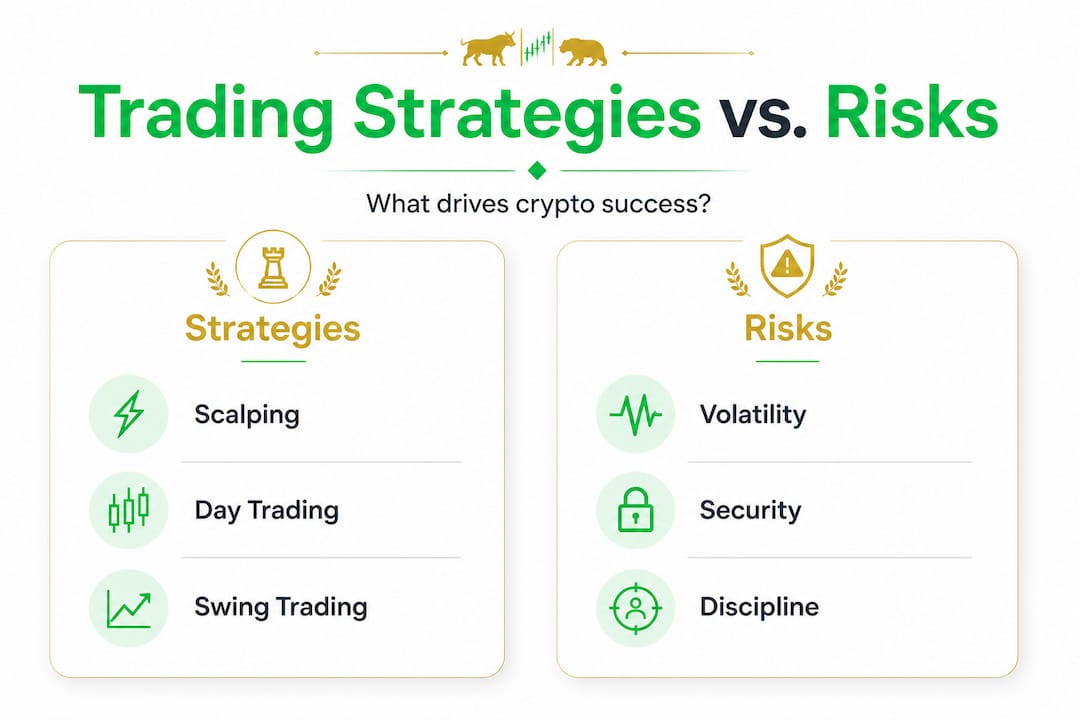
Connecting your accounts across multiple exchanges through a unified platform also reduces the friction of managing separate logins, balances, and order books. Centralized dashboards let you monitor everything in one place, and trade tracking tools give you the performance data you need to refine your approach over time.
Common risks in crypto trading and how to manage them
A robust toolset helps, but crypto trading is not risk-free. The risks here are real, varied, and sometimes devastating if you are not prepared.
Volatility is the defining characteristic of crypto markets. Bitcoin has dropped 30% in a single week multiple times in its history. Altcoins can move 50% or more in either direction within days. This volatility creates opportunity, but it also means that an unmanaged position can wipe out significant capital before you have time to react.
Statistic callout: Research consistently shows that the majority of retail traders lose money in highly volatile markets, not because their strategy is wrong, but because they fail to manage position size and emotional responses during drawdowns.
Custody and operational risks are just as dangerous as market risk. These include:
- Exchange hacks: Centralized exchanges are prime targets for cyberattacks. Several major exchanges have lost hundreds of millions of dollars in user funds.
- Exchange insolvency: Unlike bank deposits, crypto held on exchanges is typically not insured. If an exchange collapses, recovery is uncertain.
- Phishing and scams: Fake websites, impersonation attacks, and fraudulent investment schemes are rampant in the crypto space.
- Manual execution errors: Entering the wrong order size, wrong direction, or wrong price can result in immediate, unrecoverable losses.
- Smart contract bugs: On DEXs, vulnerabilities in code can lead to total loss of funds.
Pro Tip: Use two-factor authentication on every exchange account, store the bulk of your assets in noncustodial wallets when not actively trading, and never click links in unsolicited messages claiming to be from your exchange. These three habits alone eliminate a significant portion of operational risk.
Automation and analytics tools can also help manage risk systematically. Setting hard stop-losses through a bot removes the emotional temptation to "wait just a little longer" during a losing trade. Using market analysis tools to monitor volatility, volume, and sentiment gives you objective data rather than gut reactions. The traders who survive long-term are not necessarily the most brilliant analysts. They are the ones who manage risk with consistency.
Why most traders underestimate operational risk and what actually works
Here is something most trading guides will not tell you directly: the majority of traders who blow up their accounts do not fail because of bad strategy. They fail because of bad operations.
Think about it. You spend weeks developing a swing trading system with a solid win rate. You backtest it, refine the entry criteria, and feel confident. Then you miss a critical exit because your exchange went down during a volatile period. Or you accidentally entered a 10x leveraged position instead of a 1x because the interface defaulted to a setting you did not notice. Or your account gets compromised because you reused a password. The strategy was fine. The operation failed.
Operational factors can dominate outcomes even when the strategy logic is sound. Experienced traders know this. They spend as much time on their infrastructure as they do on their signals. They use dedicated devices for trading, separate email addresses for exchange accounts, hardware wallets for cold storage, and automated systems that execute without requiring them to be glued to a screen.
The uncomfortable truth is that operational discipline is boring compared to strategy development. Nobody wants to spend a Saturday afternoon setting up two-factor authentication and reviewing their custody arrangements. But that Saturday could be the difference between a recoverable setback and a catastrophic loss.
We also see traders underestimate the psychological cost of manual execution at scale. Monitoring multiple positions across different exchanges, manually adjusting stop-losses, and tracking performance in spreadsheets is exhausting and error-prone. Automation is not just about speed. It is about removing human error from repetitive tasks so your cognitive energy goes toward higher-level decisions. Our crisis portfolio lessons page covers real scenarios where operational preparation made the critical difference.
The traders who consistently perform well share a common trait: they treat their trading operation like a business. Clear protocols, documented processes, automated execution where possible, and regular audits of their security and performance data. Strategy is the idea. Operations are how you actually execute it without destroying yourself in the process.
Ready to enhance your crypto trading?
If you have made it through this guide, you already understand more about crypto trading than most people who jump in with real money. The next step is putting that knowledge into a system that works for you around the clock.
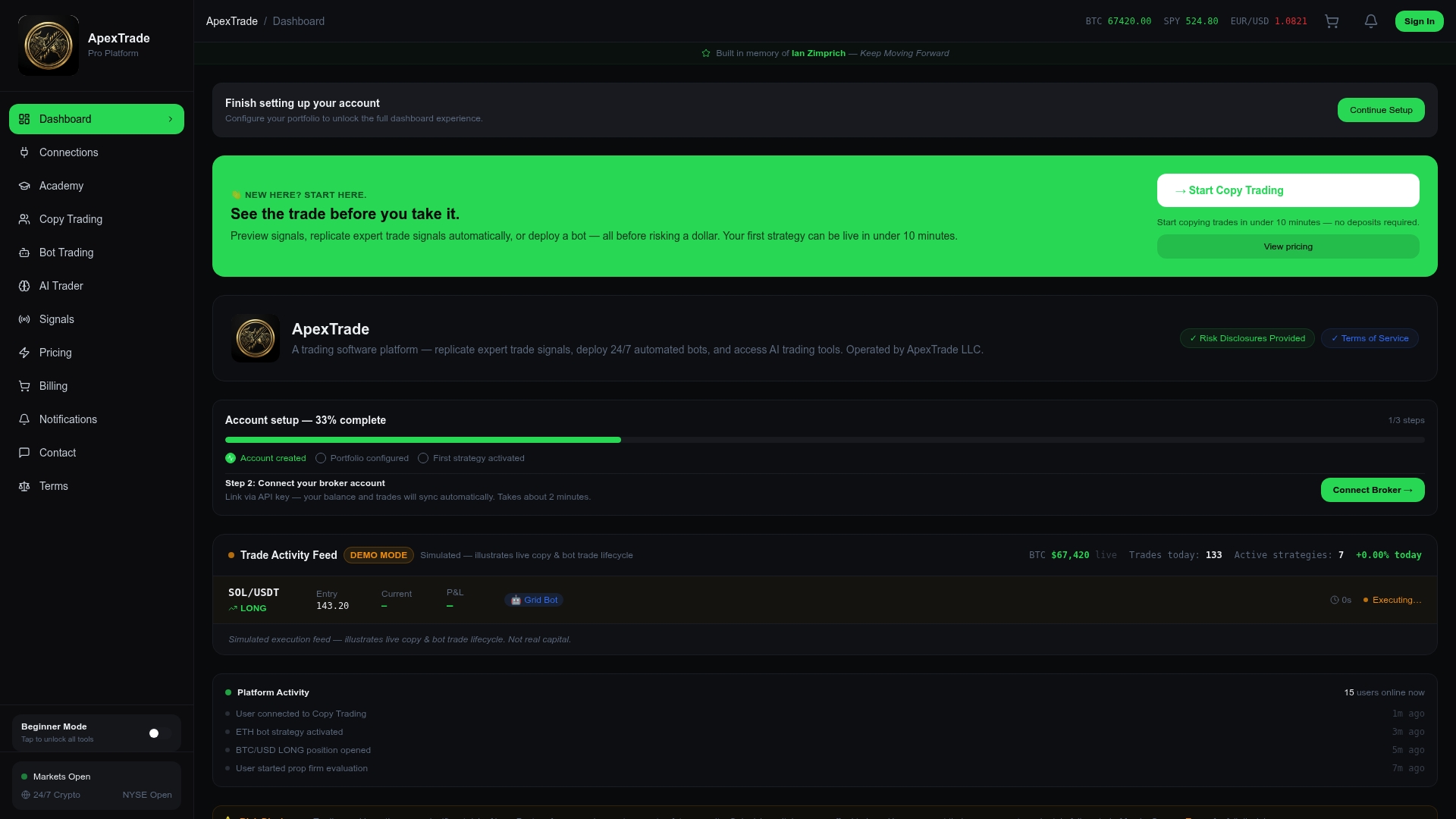
At Apex Trade LLC, we built our platform specifically for traders who want to move beyond manual execution and start trading with real efficiency. Whether you want to automate your strategy with crypto bot trading, follow proven traders through our copy trading platform, or leverage intelligent signals through our AI trading tools, we have the infrastructure to support both beginners and professionals. Our platform connects to multiple exchanges, tracks your full trade history, and gives you the operational foundation that serious trading actually requires. Start building your setup today.
Frequently asked questions
How is crypto trading different from crypto investing?
Crypto trading focuses on short-term price movements and active strategies, while investing targets long-term holding and gradual growth. Traders typically operate across timeframes from days to months, actively managing entries and exits rather than passively accumulating assets.
What is the safest way to store cryptocurrencies used for trading?
Noncustodial wallets give you full control of your private keys, while hardware wallets provide offline security for funds not actively in use. Custodial exchanges are targets for cyberattacks and do not carry the same deposit protections as traditional banks, so splitting custody based on your activity level is a practical approach.
Can beginners use trading bots or automation tools safely?
Beginners can use trading bots, but should start with proven platforms and understand each setting before deploying real money. Starting with small position sizes and paper trading modes lets you validate bot behavior before committing significant capital.
What are the most common risks in crypto trading?
The biggest risks include high volatility, scams, custody issues, and exchange hacks, all of which require proactive security and education to manage. Operational and custody risks around wallet handling and exchange selection can be just as damaging as poor strategy decisions, making operational setup a priority from day one.