

Automating your crypto trades sounds like the ultimate edge, but the gap between a profitable bot and a money-losing one often comes down to the details most traders overlook. Every step in your automation workflow, from choosing the right platform to configuring order types and reviewing post-trade logs, carries real financial consequences. Execution mechanics are integral to automation performance, including API integration, order placement, slippage, and fee awareness. This checklist breaks down exactly what you need to get right before, during, and after your automated trades run.
Table of Contents
- Criteria for a successful crypto trading checklist
- Essential tools and platforms for crypto automation
- Order execution and risk management: Checklist steps
- Post-trade review: Evaluating automation performance
- The uncomfortable truth most traders miss about automation
- Automate your trading with ApexTrade tools
- Frequently asked questions
Key Takeaways
| Point | Details |
|---|---|
| Focus on API reliability | Reliable API connections are the backbone of any crypto automation workflow. |
| Track order types and fees | Choosing the right order type and monitoring transaction fees prevent costly errors. |
| Review trading performance | Post-trade analysis helps you spot friction and refine strategies for better results. |
| Balance risk with automation | Risk management steps such as stop-loss and portfolio checks protect your capital during automated trading. |
Criteria for a successful crypto trading checklist
Before you deploy a single bot or configure your first automated signal, you need a clear framework. Think of this as your pre-flight checklist. Skipping it is like launching a rocket without checking the fuel gauge.
The most effective automated trading setups share a few non-negotiable qualities. API integration quality, order placement method, slippage, and fee awareness are key factors that determine whether your strategy actually performs in live markets. A strategy that looks great in a backtest can fall apart fast when real-world friction enters the picture.
Here are the core criteria every trader should evaluate before automating:
- Define your automation goals clearly. Are you targeting short-term scalping, swing trading, or long-term position building? Each demands a different bot configuration and risk tolerance.
- Assess your risk tolerance honestly. Set a maximum drawdown limit before you start. If your bot hits that threshold, it should pause automatically.
- Evaluate API reliability for your chosen exchange. Downtime, rate limits, and authentication errors can cause missed trades or unintended positions.
- Understand order types before you configure them. Market orders fill fast but can suffer slippage. Limit orders give you price control but may not fill during fast-moving markets.
- Factor in all trading fees before calculating expected returns. Maker and taker fees, withdrawal costs, and spread all chip away at your edge.
- Plan your post-trade review process from day one. Use portfolio tools to track performance against your original goals and catch drift early.
Getting these criteria locked in before you touch a single setting will save you hours of troubleshooting and, more importantly, real money.
Essential tools and platforms for crypto automation
With your criteria defined, the next step is choosing the right tools. The automation ecosystem is crowded, and not all platforms are built equally. The wrong choice here can introduce technical debt that costs you in the long run.
When comparing platforms, focus on four core capabilities: bot trading features, API connection stability, copy trading integration, and real-time monitoring dashboards. A platform that excels in one area but fails in another will create gaps in your workflow.
Bot trading platforms are the backbone of automated crypto strategies. The best ones offer pre-built strategy templates, customizable logic, and clear performance reporting. When evaluating bot trading tools, look for platforms that support multiple exchanges through a single interface. Managing separate bots across five exchanges through five different dashboards is a recipe for errors.
API connection quality is where many traders underestimate risk. API integration quality directly impacts whether an automation edge survives after friction. A slow or unreliable API connection means your bot might send an order half a second late during a fast market move. That half-second can be the difference between a profitable fill and a bad one. Always test your account integration in a paper trading environment before going live.
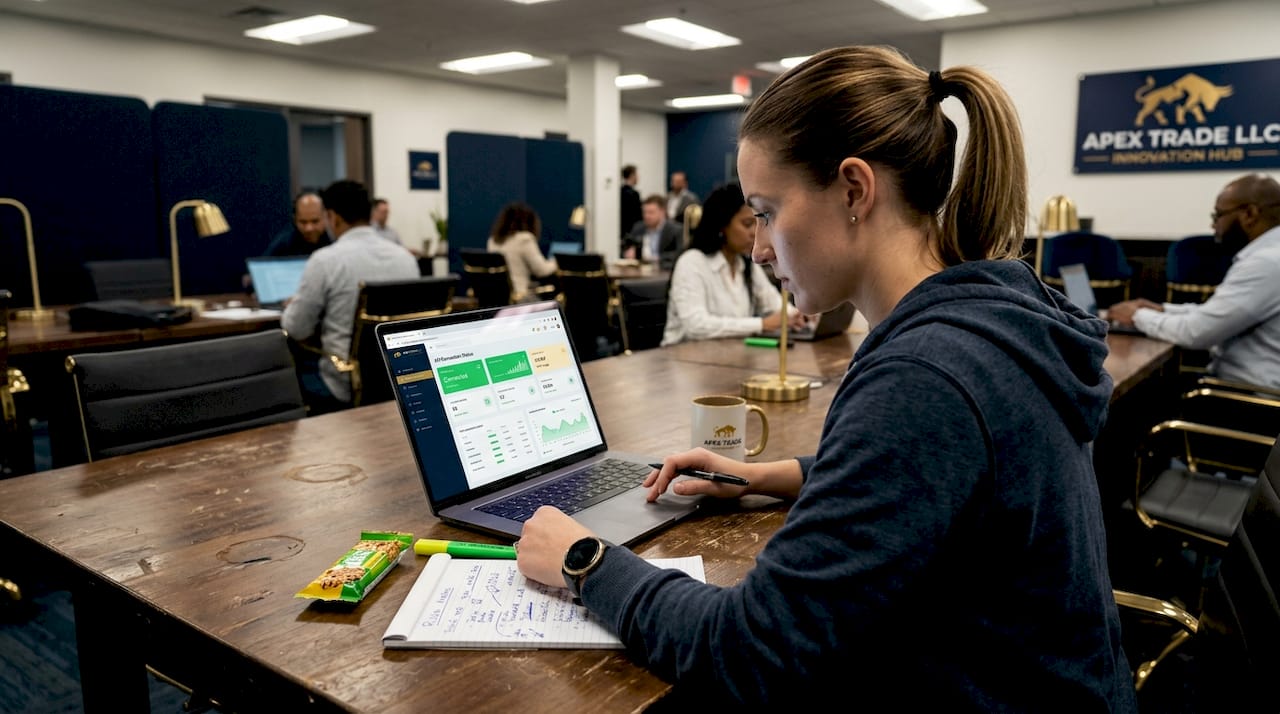
Copy trading is an underrated tool, especially for traders who want automated exposure to proven strategies without building everything from scratch. Copy trading platforms let you mirror the trades of experienced traders automatically, which means you benefit from their research and execution while your capital does the work.
Key features to compare when selecting your automation platform:
- Real-time order monitoring and alerts
- Support for multiple order types (limit, market, stop-limit, trailing stop)
- Transparent fee reporting within the dashboard
- Backtesting capabilities with realistic slippage modeling
- Secure API key management with permission controls
- Active customer support and uptime guarantees
Pro Tip: Before committing to any platform, run a one-week paper trading test with your intended strategy. Track every fill, every missed order, and every API error. That data will tell you more about platform reliability than any marketing page ever will.
Order execution and risk management: Checklist steps
Choosing your tools is only half the job. How you configure order execution and risk controls determines whether your automation actually protects your capital or exposes it to unnecessary risk. This is where most traders make costly, avoidable mistakes.
Follow this step-by-step checklist before every live deployment:
- Choose your order type deliberately. Limit orders protect you from slippage but risk non-fills. Market orders guarantee execution but expose you to price gaps. Match the order type to the market condition your strategy targets.
- Set stop-loss rules at the strategy level, not just the trade level. A per-trade stop-loss is good. A daily drawdown limit that halts the bot entirely is better.
- Configure take-profit targets with realistic expectations. Overly ambitious targets mean your bot holds positions too long, turning winners into losers.
- Monitor for slippage on your first live trades. Compare your expected fill price to your actual fill price. If the gap is consistently large, your order sizing or order type needs adjustment.
- Verify API permissions are set correctly. Your bot should only have trading permissions, never withdrawal access. This is a critical security step that many traders skip.
- Review trading fees one final time before launch. Fees compound across hundreds of trades. A 0.1% fee difference across 500 monthly trades adds up to a significant drag on returns.
- Log your first 10 live trades manually. Compare them against your backtest expectations to catch configuration errors early. Use trade execution details to verify each fill.
Order placement method and fee awareness determine whether an edge survives after friction. This is not a theoretical concern. It is the most common reason profitable backtests fail in live markets.
"The best automated strategy in the world becomes a losing one if execution mechanics are ignored. Slippage, fees, and API latency are not edge cases. They are the rule in live crypto markets."
Here is a comparison of common execution strategies to help you decide which fits your setup:
| Execution strategy | Speed | Slippage risk | Fee impact | Best for |
|---|---|---|---|---|
| Market order | Instant | High | Taker fee | High-volatility scalping |
| Limit order | Delayed | Low | Maker fee | Swing trading, range strategies |
| Stop-limit order | Conditional | Medium | Maker fee | Trend-following with downside protection |
| Trailing stop | Dynamic | Medium | Taker fee | Momentum strategies |
Pro Tip: Always double-check API permissions and fee structures before launching any live bot. Use your platform's strategy builder to simulate the fee impact of your chosen order types across a range of trade volumes before going live.
Post-trade review: Evaluating automation performance
Deploying your bot is not the finish line. It is the starting line for a continuous improvement process. The traders who consistently outperform over time are the ones who treat every completed trade as a data point, not just a profit or loss.
Execution mechanics must be reviewed regularly to ensure that your edge survives after friction. Slippage creep, fee changes, and API degradation can all quietly erode a strategy that was working well just weeks ago.
Use this post-trade review checklist after every major trading session:
- Compare actual fills to expected fills. A consistent gap signals a slippage problem or an order type mismatch.
- Review total fee costs against projected costs. If fees are higher than expected, check whether your bot is generating more taker orders than intended.
- Check API error logs. Even one or two missed orders per session can compound into significant missed opportunities over a month.
- Measure actual performance against backtest projections. Use trade analysis tools to build a clear picture of where live performance diverges from your model.
- Assess drawdown against your pre-set limits. If you are consistently approaching your maximum drawdown threshold, your position sizing or stop-loss logic needs recalibration.
- Update your strategy documentation. Every change you make should be logged with a date and a reason. This creates an audit trail that helps you identify what is working.
Here is a sample performance tracking table to use in your own review process:
| Metric | Backtest target | Live result (week 1) | Live result (week 2) | Variance |
|---|---|---|---|---|
| Win rate | 58% | 54% | 56% | Acceptable |
| Average slippage | 0.05% | 0.12% | 0.09% | Needs review |
| Total fees paid | $45 | $67 | $58 | Above target |
| API error rate | 0% | 1.2% | 0.4% | Improving |
| Net return | 3.2% | 2.1% | 2.6% | Below target |
Tracking these metrics weekly using portfolio review tools gives you the data you need to make informed adjustments rather than emotional ones. The goal is to close the gap between your backtest model and your live results over time, not overnight.
The uncomfortable truth most traders miss about automation
Here is something we see constantly: traders spend weeks perfecting their strategy logic, optimizing entry signals, and fine-tuning indicators. Then they go live and wonder why the results look nothing like the backtest. The strategy was not the problem. The mechanics were.
API integration quality, order placement method, slippage, and fee awareness are the hidden battlefields for automation. Most traders treat these as setup details to handle once and forget. In reality, they are ongoing variables that change as markets evolve, exchanges update their infrastructure, and fee structures shift.
Think about it this way. A strategy with a 55% win rate and a 2:1 reward-to-risk ratio looks great on paper. But add 0.15% average slippage per trade, a 0.1% taker fee on both sides, and one API outage per week that causes two missed trades, and that edge shrinks dramatically. In a high-frequency setup running 20 trades per day, these costs are not rounding errors. They are the difference between profit and loss.
The traders who succeed long-term with automation are not necessarily the ones with the most sophisticated strategies. They are the ones who obsess over the trading workflow details that most people ignore. They audit their API connections monthly. They track fee changes when exchanges update their pricing. They review order logs not just for wins and losses, but for execution quality.
Build a monthly mechanical audit into your routine. Check your API latency, review your fee structure, and compare your last 30 days of live fills against your model. This habit alone will keep your automation performing closer to its theoretical edge than anything else you can do. Strategy optimization is important, but mechanical hygiene is what keeps the lights on.
Automate your trading with ApexTrade tools
The checklist we have covered here is only as powerful as the tools you use to execute it. You need a platform that handles the mechanical complexity so you can focus on strategy and review.
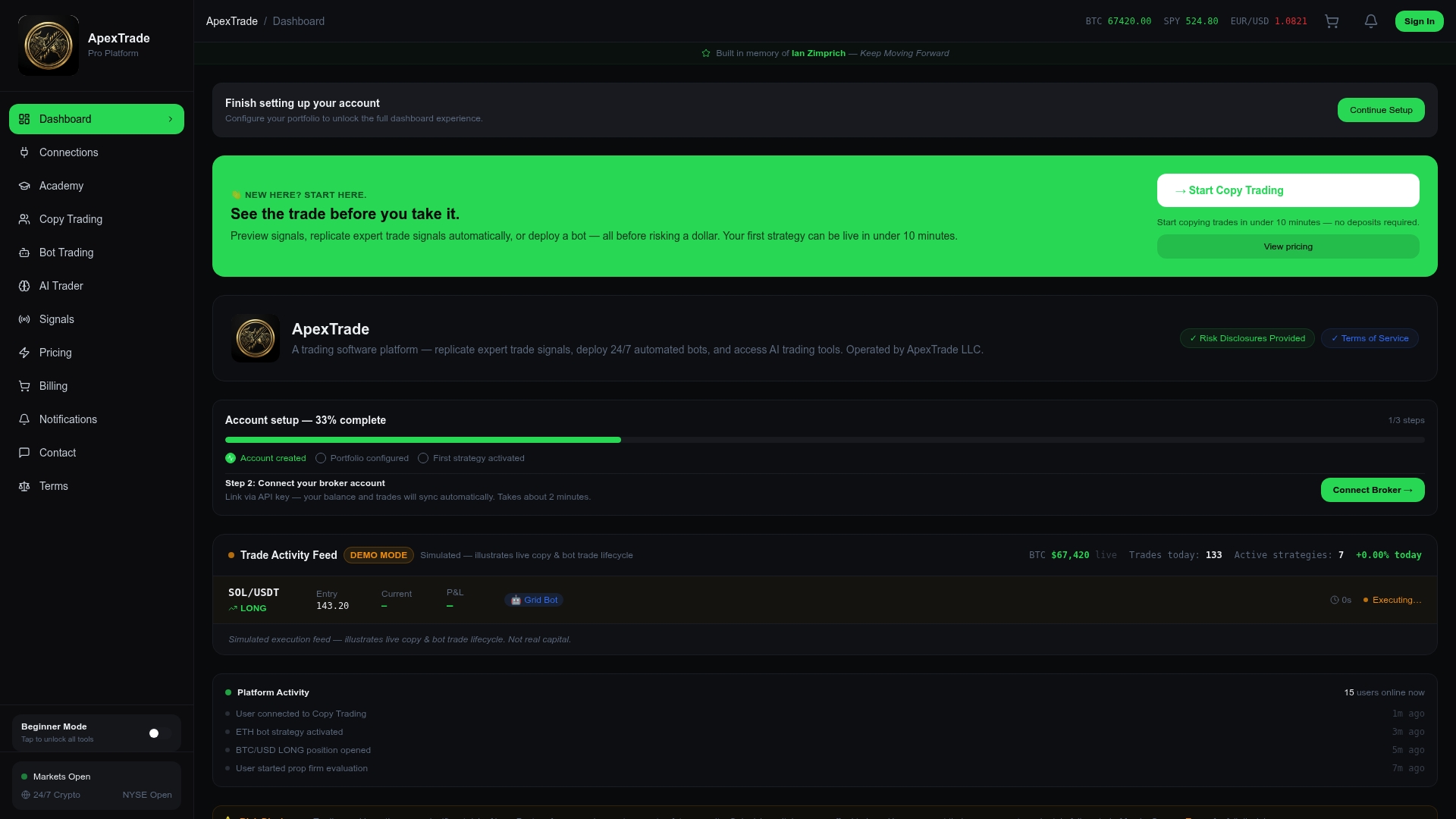
Apex Trade LLC brings together bot trading solutions and copy trading features in one integrated platform built specifically for traders who take automation seriously. Whether you are deploying your first bot or managing a multi-strategy portfolio across several exchanges, the platform gives you the API reliability, fee transparency, and real-time monitoring you need to close the gap between backtest and live performance. Stop guessing and start trading with a system designed to support every step of the checklist you just learned.
Frequently asked questions
What is the most important step in a crypto trading checklist?
Ensuring API integration reliability and clear order execution parameters is the most critical foundation for automated trading success, because both directly determine whether your strategy performs as intended in live markets.
How can I avoid costly slippage in crypto automation?
Review your order placement method and platform fee structures regularly, and favor limit orders over market orders when your strategy allows for slight execution delays.
Which platforms are best for automated crypto trading?
Compare platforms by API reliability and feature set alongside fee transparency, since specialized bot trading and copy trading tools tend to offer the most complete automation workflows.
How often should automated trading systems be reviewed?
Traders should audit performance logs and API connections after every major trading session or strategy change, with a deeper mechanical audit conducted at least once per month.